Women, Retirement and Longevity

By Retirement

Funding a comfortable retirement has the potential to be a challenging process for anyone. But women, in particular, are especially likely to confront a number of financial risks during their 60s, 70s and beyond. The main reason: Women have a well-established history of living longer than men as well as building less wealth than men over their lifetimes. That one-two punch can make retirement feel like a bit of a minefield for many women—even those with significant wealth.

The good news: There are steps women can take that can potentially put them in a better position for retirement.

Women face some unique hurdles that make their march toward retirement that much steeper. For example:

Women live longer.

Women live almost six years longer than men, on average, to age 79 versus 73½ years old, respectively, according to the Centers for Disease Control and Prevention. The CDC has also forecast life expectancy at birth for women in 2019 at 81.4 years, versus 76.3 years for men. But at age 65, women are likely to live nearly another 21 years compared to men’s additional expected 18 years.

What’s more, affluent women tend to live even longer. One study found that women in the top 1% were expected to live to 88.9—10.1 years longer than those in the bottom 1%. Those extra years can boost the odds of women both running out money and spending some of their retirement years without a partner for support.

Living longer may lead to spending more money on health care. More than 70% of assisted living residents are women, and over half of nursing home residents are female, according to statistics compiled by Zippia.

Women build less wealth.

Women’s financial health is also generally less sound than men’s. U.S. Census Bureau data shows that just 22% of women have $100,000 or more saved for retirement, while 30% of men do. What’s more, U.S. women are projected to reach retirement with just 75% of the wealth accumulated by men, according to Willis Towers Watson.

This disparity can lead to some alarming outcomes. For example, women 65 and older are 80% more likely than men of the same age to be living in poverty, according to The National Institute on Retirement Security.

If you have significant assets, you may not be likely to become impoverished, of course. But the research highlights the risks that women, in particular, face when it comes to having adequate funds to live a comfortable lifestyle in retirement.

STRATEGIES TO CONSIDER

Some of the biggest systemic challenges for women—such as the gender pay gap—won’t likely be solved overnight. The good news is that a successful retirement is possible for women who harness these various strategies:

  1. Plan for a multistage retirement. The facts point to women in general living longer than men. Therefore, heterosexual women with a partner should consider what retirement will look like as part of a shared journey and, later, as a solo voyage. Each stage may have different financial requirements and costs as well as other issues to navigate. The solo stage, if it occurs, is likely to be more expensive and complicated as you age and potentially face increased health care costs and responsibilities you’ll need to address on your own instead of with a partner. Planning for a multistage retirement should involve honest discussions about investing and spending—as well as wishes and needs—with advisors, family members and others who might one day be involved in helping with caregiving.
  1. Get involved—and stay involved—with family finances. If you’re not already, look to be an active partner in investment decisions and other financial matters. That might mean learning more about aspects of financial planning and retirement spending (from your advisor, books, adult ed classes and other resources), as being financially literate can be crucial in making wise, confident decisions about wealth—or even simply understanding actions that people may want to take on your behalf.
  1. Work smarter. If you work, look for ways to increase your take-home pay. One idea is to job hop. Pew Research found that 60% of workers who changed jobs saw an increase in their real earnings, versus only 47% of those who remained with the same employer. Staying in the workforce for a longer period of time is another way to potentially arrive at retirement with more money saved up. It could also help you build up additional Social Security credits that result in more retirement income.

Another advantage to working longer: People with “post-retirement” jobs related to their previous careers reported better mental health than those who fully retired, according to research published in the Journal of Occupational Health Psychology.

  1. Allocate more money to retirement savings. An obvious move—one that could be easier said than done, of course—is to set aside more money in retirement-focused accounts. That might mean putting more into a 401(k) or Roth IRA, or a health savings account designed to help fund health care expenses. There are also spousal IRAs, which let a working partner open an IRA for a nonworking spouse to save for retirement. Consult with a professional about the rules, benefits and risks of any retirement savings option you’re considering.

Conclusion

Retirement can present some unique and tough challenges for women. But there are plenty of ways you can increase the likelihood of living the lifestyle you desire and remaining in healthy financial shape throughout your golden years.


ACKNOWLEDGMENT: This article was published by the VFO Inner Circle, a global financial concierge group working with affluent individuals and families and is distributed with its permission. Copyright 2025 by AES Nation, LLC.

This report is intended to be used for educational purposes only and does not constitute a solicitation to purchase any security or advisory services. Past performance is no guarantee of future results. An investment in any security involves significant risks and any investment may lose value. Refer to all risk disclosures related to each security product carefully before investing. Advisory services offered through NewEdge Advisors LLC, a registered investment advisor. Anthony Baruffi is a registered representative of NewEdge Advisors LLC. Anthony Baruffi and NewEdge Advisors LLC are not affiliated with AES Nation, LLC. AES Nation, LLC is the creator and publisher of the VFO Inner Circle Flash Report.

High Earners Face New Limits on 401(k) Catch-Up Contributions

By Changes to 401(k) Catch-Up Contributions

Originally published in The Wall Street Journal, September 24, 2025, by Ashlea Ebeling

What’s Changing

Starting in 2026, workers age 50 and older who earn more than $145,000 will no longer be able to make pretax catch-up contributions to their 401(k) plans. Instead, these contributions must be made on an after-tax basis into a Roth 401(k).

Key points:

  • The IRS finalized rules from a 2022 law mandating Roth-only catch-up contributions for high earners.
  • The income threshold is $145,000 in wages (indexed to inflation).
  • For those 60–63, the “super catch-up” of up to $11,250 will also fall under the Roth-only mandate if income exceeds the threshold.
  • Savers without a Roth 401(k) option could lose access to catch-up contributions entirely.
  • Pretax deductions will be lost—e.g., someone in the 35% bracket forfeits nearly $4,000 in tax savings on an $11,250 catch-up contribution.
  • This change could also increase taxable income, phasing out other deductions and potentially pushing some into higher tax brackets.

Why It Matters for High Earners

While the loss of upfront deductions may feel like a setback, Roth contributions bring long-term advantages:

  • Tax-free growth and withdrawals in retirement.
  • Diversification of tax exposure—balancing pretax, Roth, and taxable accounts.
  • Protection against rising future tax rates, since taxes are paid now.

Employers are rapidly adding Roth options to plans, but if yours does not, catch-up contributions may disappear until it does.

Recommendations for High-Earning Clients

To ensure you remain on track for a tax-efficient retirement:

  1. Confirm your plan offers a Roth 401(k). If not, encourage your employer to add one—most large providers already do.
  2. Review contribution strategy now. Consider gradually shifting a portion of regular 401(k) savings to Roth, not just the catch-up.
  3. Balance across account types. Maintain a mix of pretax, Roth, and taxable savings to provide flexibility in retirement withdrawals.
  4. Evaluate income thresholds. If you are close to $145,000, planning compensation and deferrals carefully could preserve pretax catch-up eligibility in certain situations.
  5. Coordinate with tax planning. Since Roth contributions increase adjusted gross income, review the potential impact on phaseouts of deductions and credits.

At Baruffi Private Wealth, we view this change not as a loss but as an opportunity to strengthen long-term retirement planning. By embracing Roth strategies, high earners can build a more resilient and tax-efficient income stream for the future.

In the Flow

By State of the Markets - 3Q 2025

When an athlete is performing at their highest level, it is often said that they are “in the zone” or “in the flow.” This state of complete focus and harmony—where effort feels effortless—is a goal pursued by professionals and weekend athletes alike. Legendary figures such as Kobe Bryant, Serena Williams, Tom Brady, and Mikaela Shiffrin are renowned for consistently reaching this state. Teams, too, have experienced it—think of the 1985 Chicago Bears, the Boston Red Sox of the 2000s, or the Red Bull Formula 1 team. (With some luck, perhaps the 2025 Seattle Mariners will one day join that list.)

At the risk of tempting fate, financial markets over the past quarter have also seemed to find their rhythm. Every major sector delivered positive returns, with markets rewarding good news and, for now, brushing off less favorable headlines. While this kind of synchronized momentum is encouraging, we know from both sports and markets that staying “in the flow” is not a permanent state.

U.S. Equities – Strong Earnings and AI Momentum

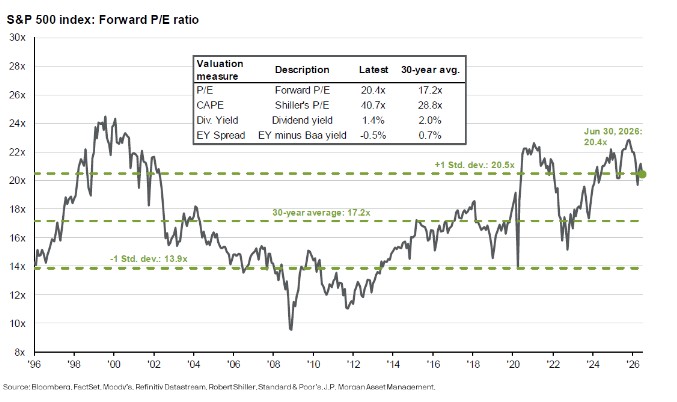
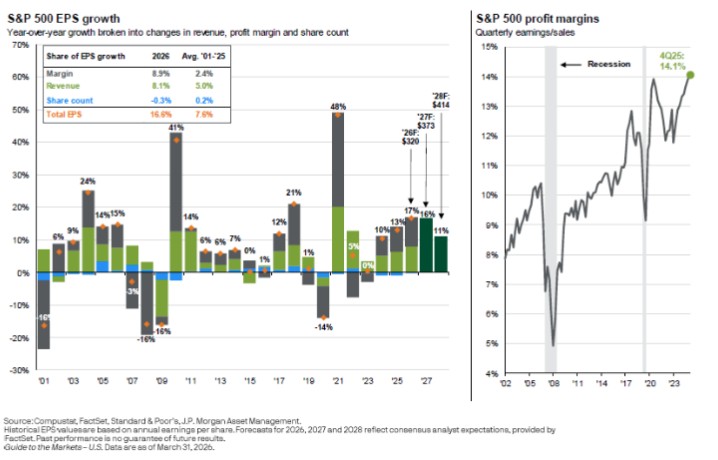
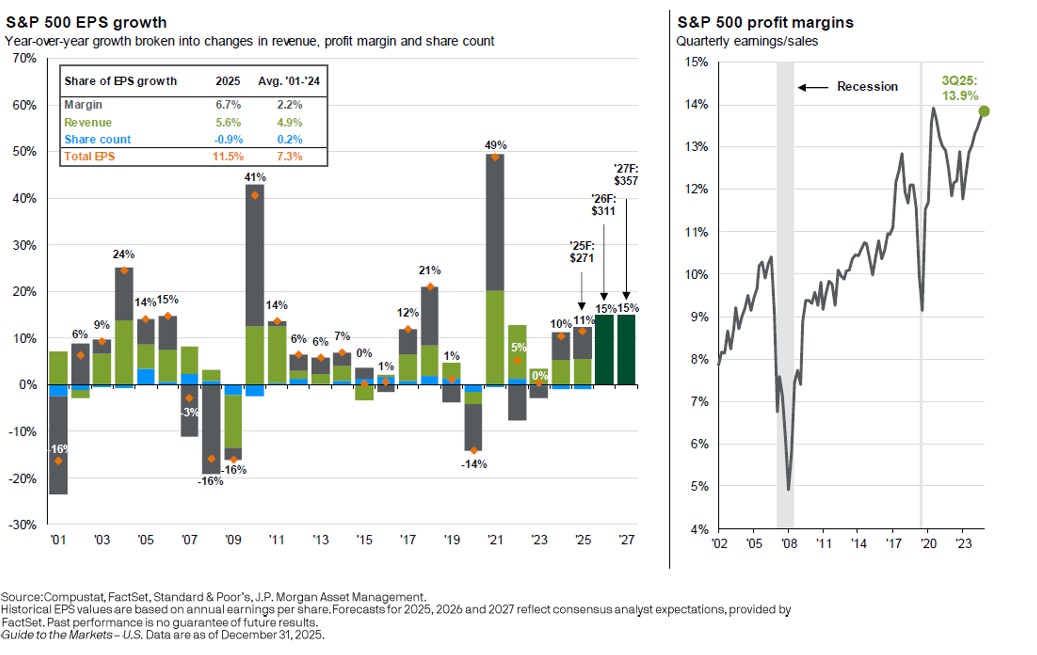
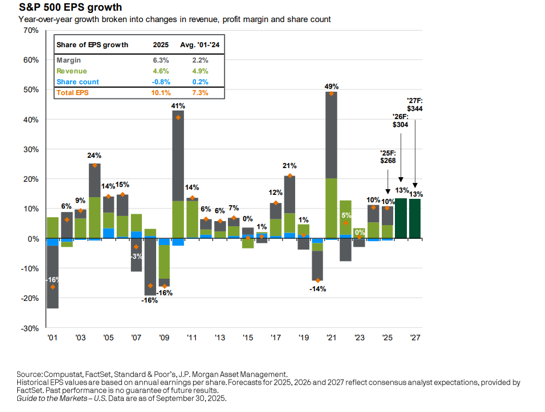
As of October 1, the S&P 500 reached a record high for the 29th time in 2025, even briefly moving above 6,700. The positive returns were underpinned by solid fundamentals: second-quarter operating earnings rose 10.55% year over year, according to Standard & Poor’s.

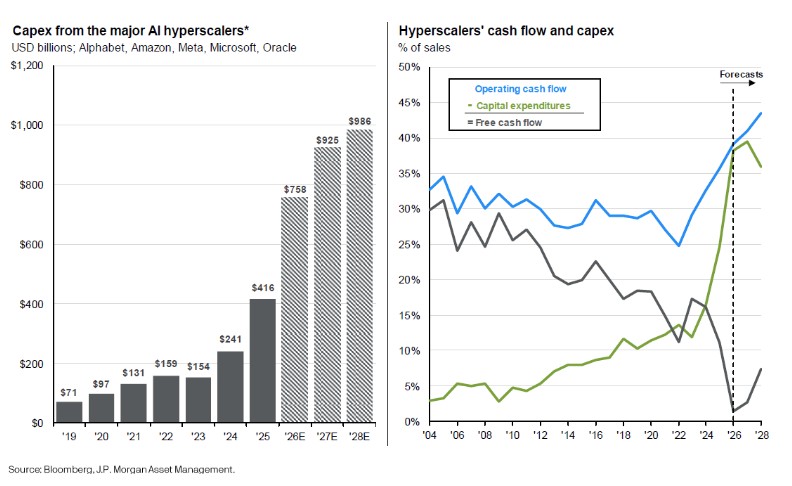
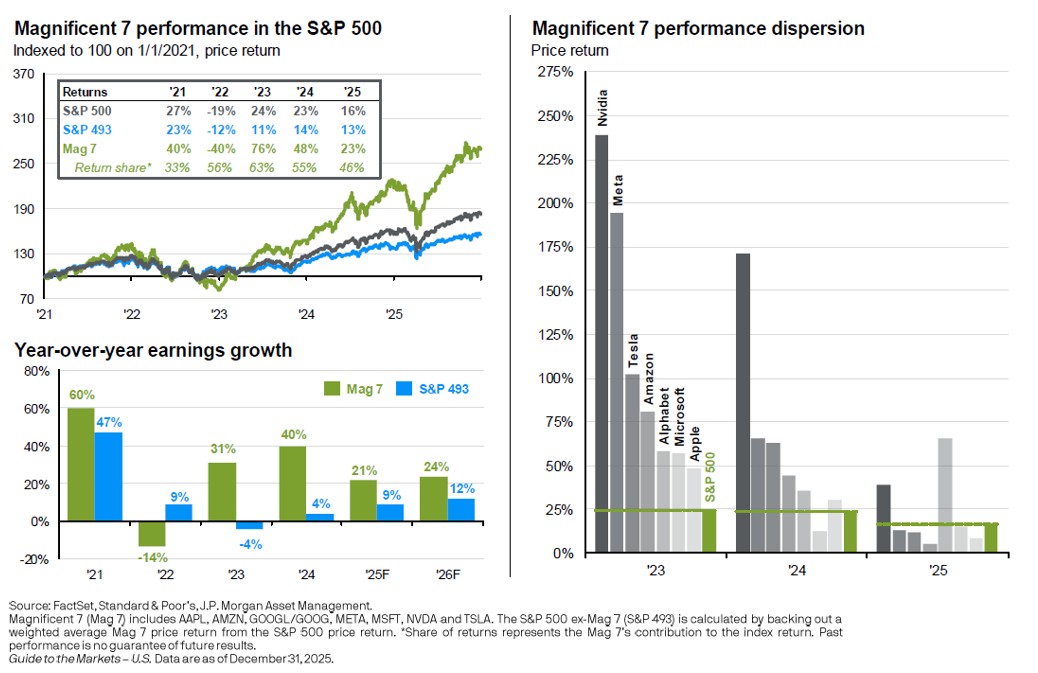
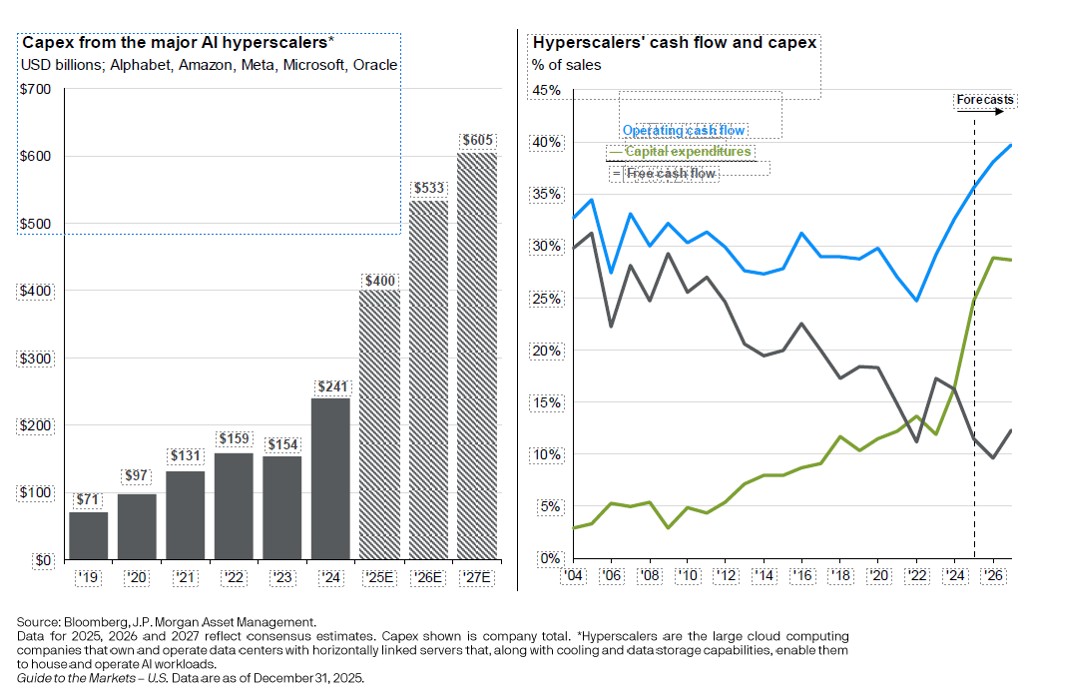
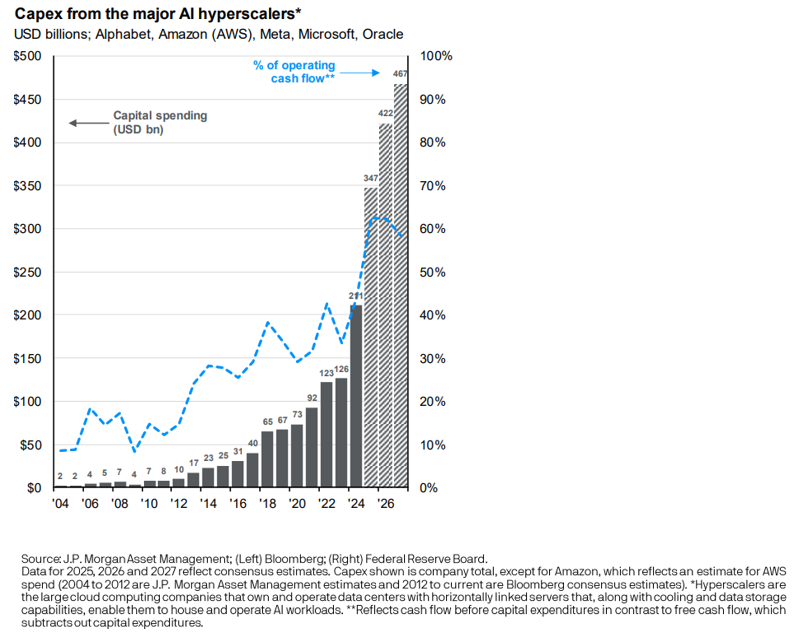
Growth companies led the way, with the Vanguard Growth ETF up 12.50% in the quarter. Value-oriented companies and small caps also advanced, though more modestly, at 6.85% and 3.50% respectively. Investors continue to reward companies tied to artificial intelligence, though the question of when those substantial investments will begin to deliver measurable returns remains open.

International Equities – Positive but Uneven

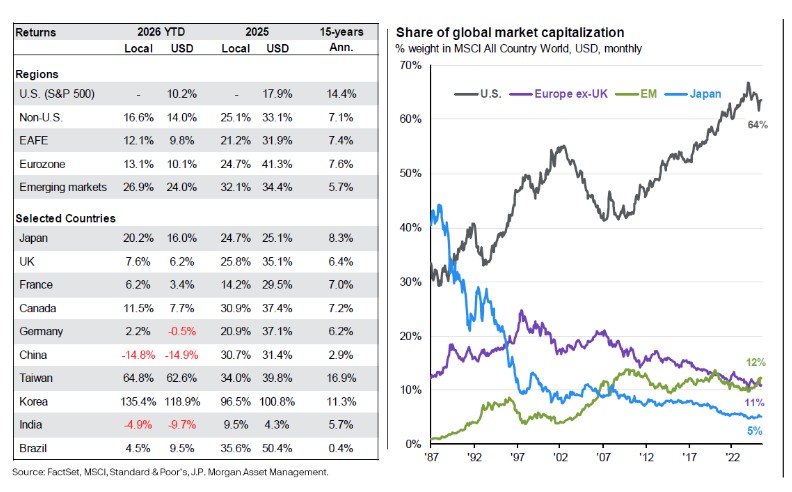
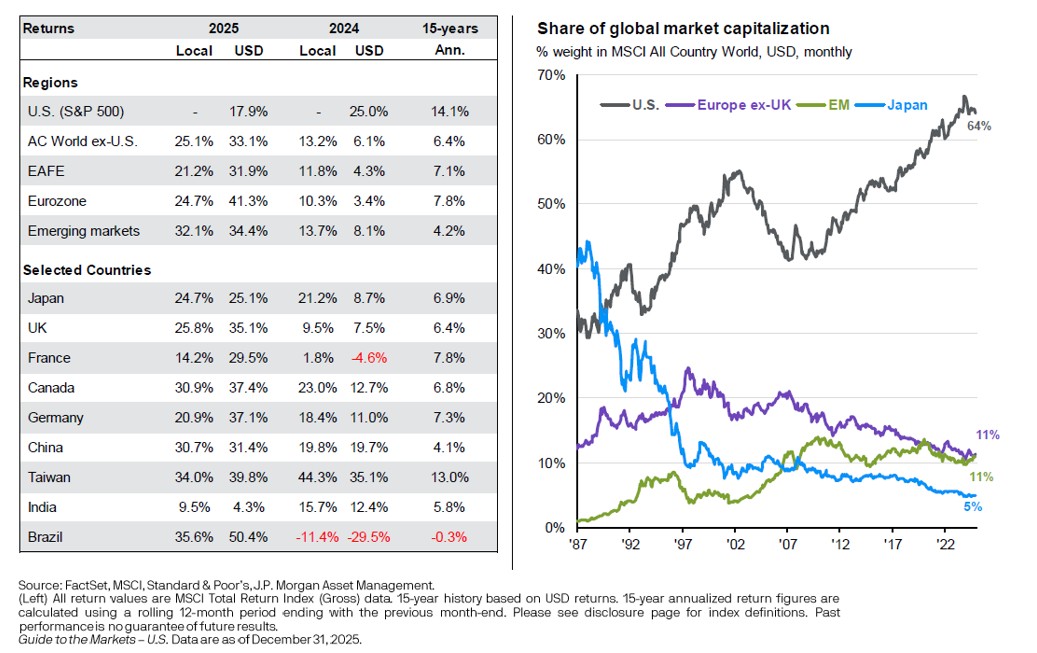
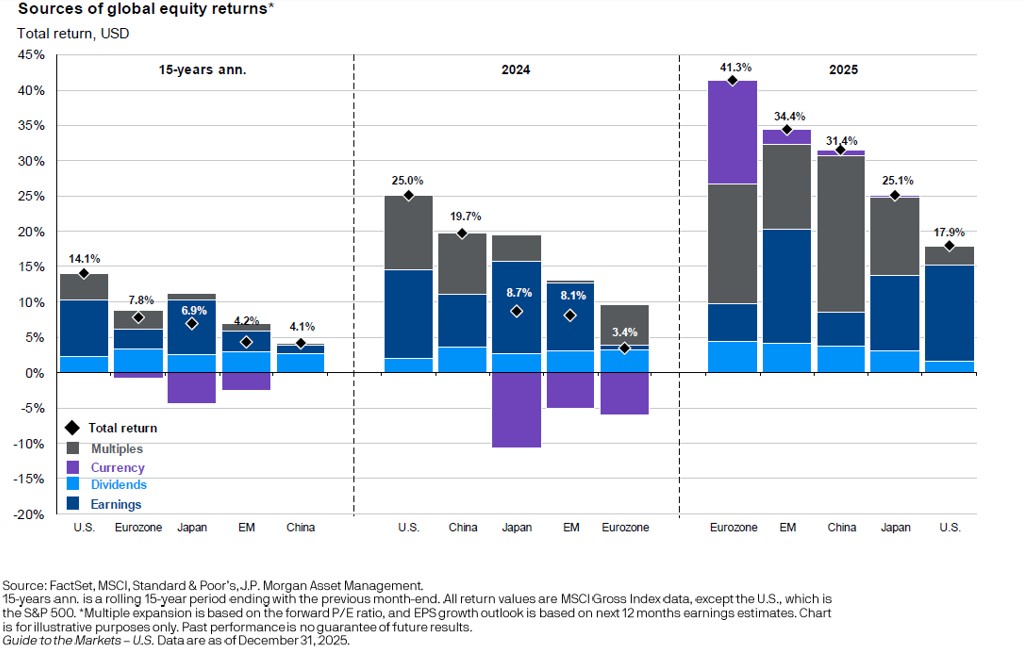
International markets also contributed to gains. Emerging markets climbed 10.11% for the quarter, and Asian developed markets advanced 7.62%. European equities trailed these regions but still managed a respectable 3.24% return.

While the breadth of international gains is encouraging, regional performance continues to diverge, underscoring the importance of diversification and careful allocation.

Fixed Income – Support from the Fed

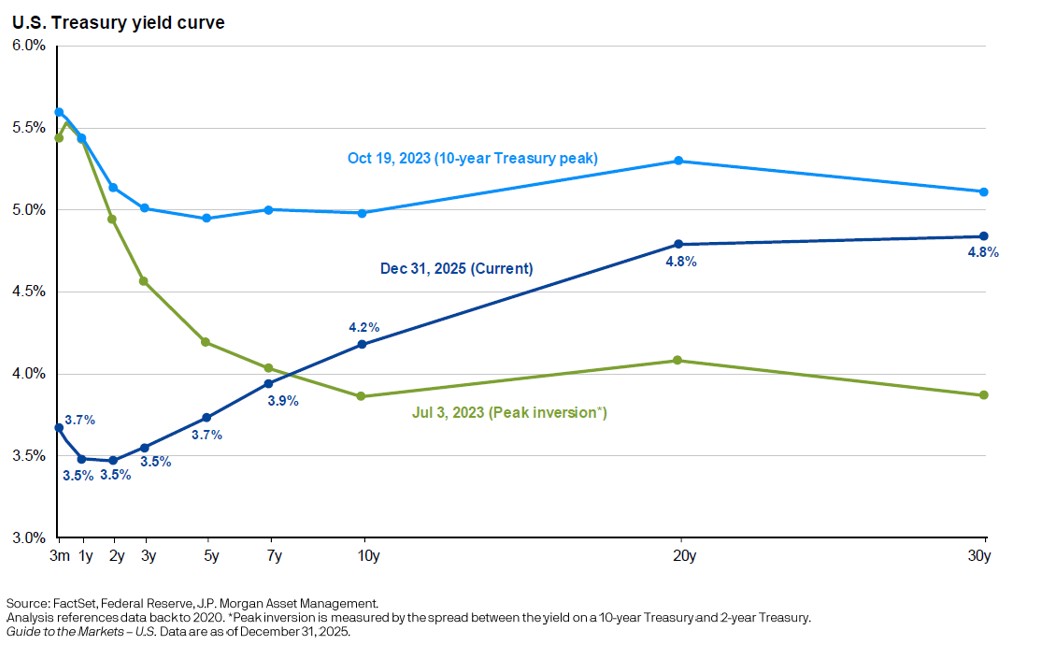
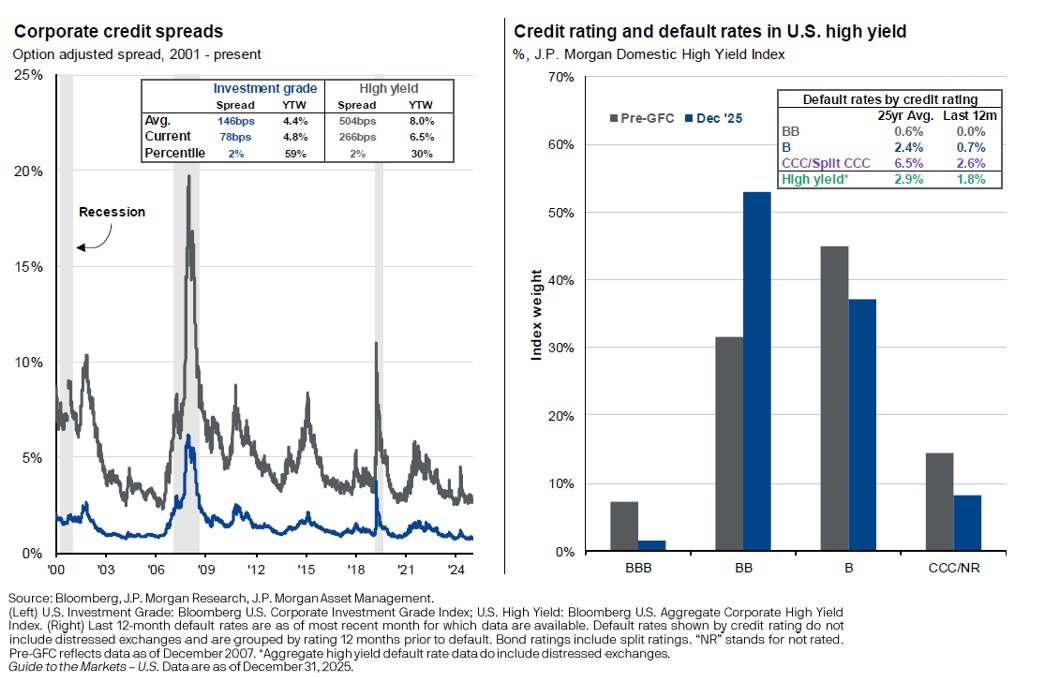
Bonds also enjoyed a strong quarter. Signs of a softer labor market, combined with steady inflation, prompted the Federal Reserve to lower short-term interest rates by a quarter point in September. Yields moved slightly lower, and both corporate bonds and mortgage-backed securities outperformed U.S. Treasuries, helped by healthy corporate balance sheets and reduced volatility in interest rates.

Economy – Growth Signs Mixed

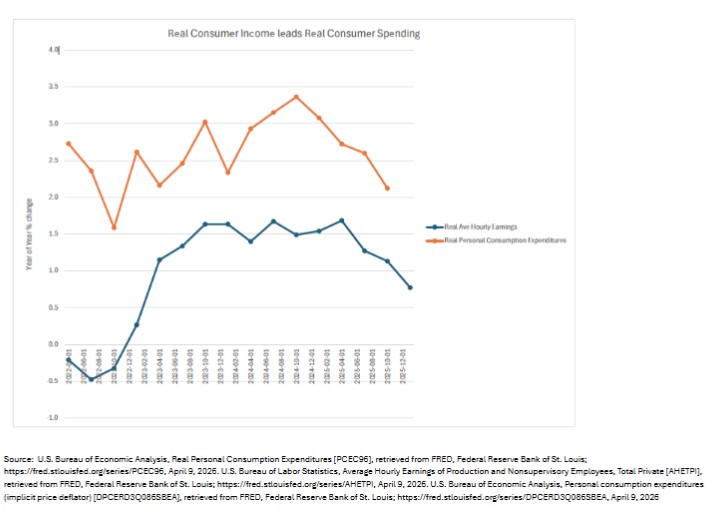
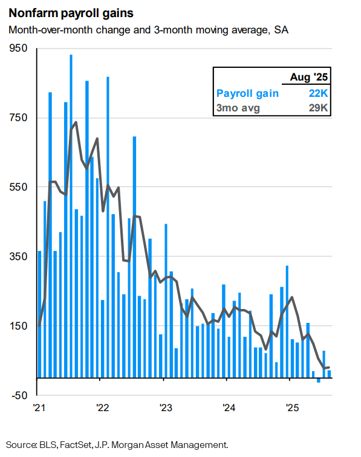
Consumers, for the most part, looked past tariff-related concerns, as many companies absorbed costs rather than passing them along. Still, revisions to labor data raised new questions: the Bureau of Labor Statistics cut its estimate of 2024 job growth by more than 900,000 positions. Forecasts for job growth in 2025 are trending below 2024 levels. Consumer spending, however, has remained resilient. High-income households, which account for over half of all consumer spending, continue to support economic activity. Whether this spending power can offset broader labor market weakness is a key trend to monitor.

Looking Ahead – Staying in Rhythm, Aware of the Clock

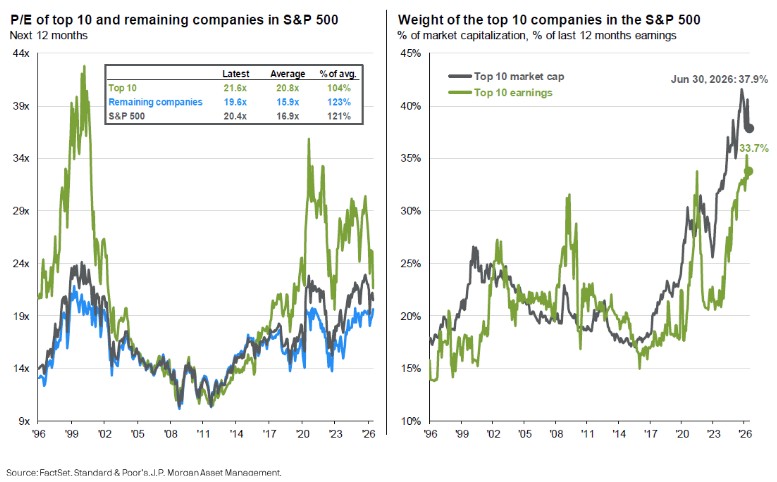
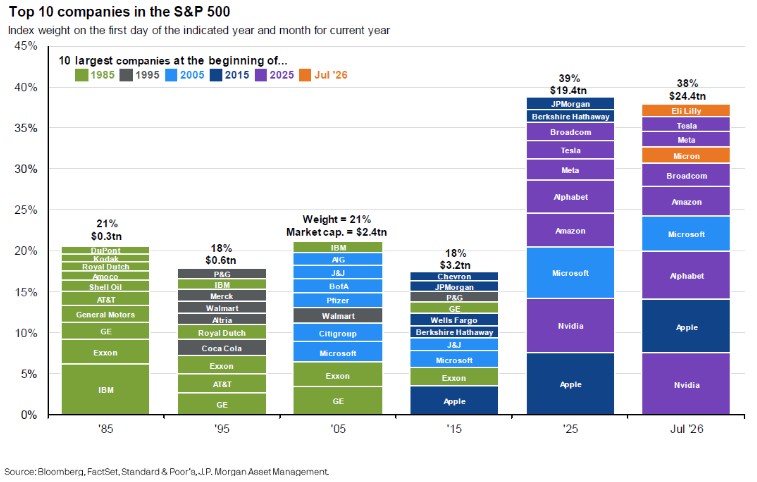
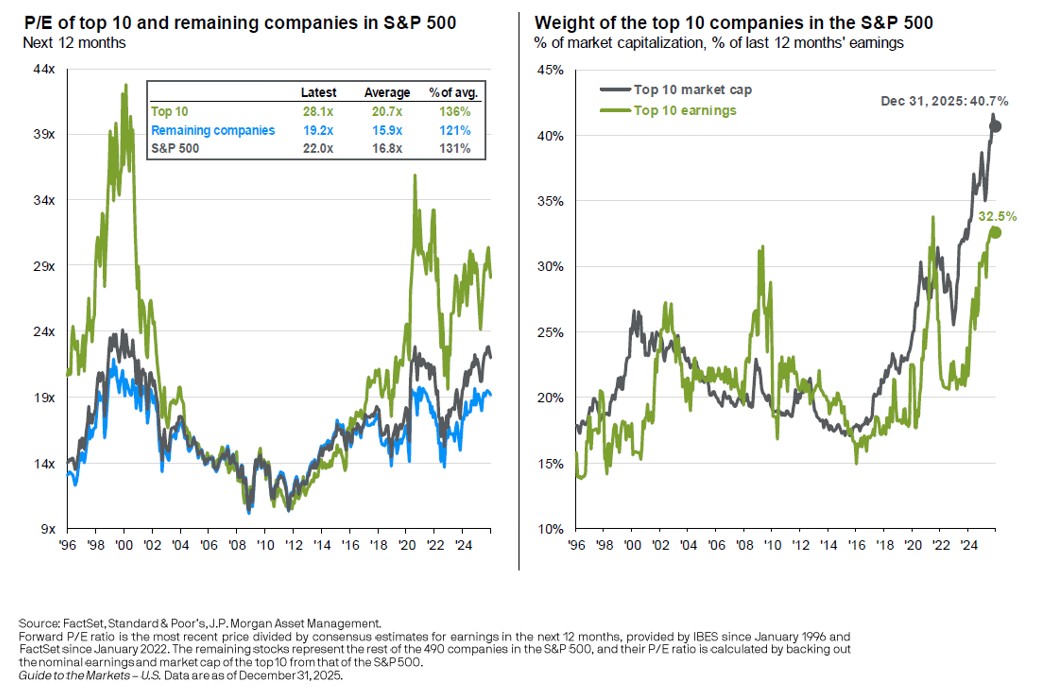
Corporate profits continue to expand, consumers remain willing to spend, and businesses are investing for future growth. Technology continues to dominate headlines and portfolios, with the ten largest companies in the S&P 500 now representing more than 40% of the index’s market capitalization. Such concentration highlights both the power of innovation and the importance of vigilance.

The overall backdrop remains constructive: inflation is moderating, interest rates have eased slightly, and spending is steady. Yet, just as an athlete cannot stay in the flow forever, markets eventually face disruptions. For now, the momentum is intact—but we remain mindful that the positive fundamentals that have led to this virtuous cycle will change over time.

As always, we appreciate your trust and partnership. Our focus remains on helping you navigate markets with clarity, discipline, and perspective. Please don’t hesitate to reach out with any questions.


Source: JP Morgan, Bloomberg.com, Bureau of Labor Statistics, and https://investor.vanguard.com/Vanguard

When Financial Uncertainty Rears Its Ugly Head

By Financial Uncertainty

Key Takeaways:

  • Most Americans experience an event that causes their income and/or net worth to drop significantly.
  • After a financial shock, review your situation and plan with a trusted professional.
  • You can manage both your money and your mental state with a few smart moves.

As much as we like to think we’re on top of our lives, unexpected setbacks and challenges can occur at any time. A sudden job loss, a terminal diagnosis or death in your family, a lawsuit directed at you, or a major disaster that wrecks your home or other property may cause significant distress that throws you off your game—and puts your financial future in question.

And while having significant savings or an extensive resume might mitigate much of that uncertainty, affluence and experience don’t guarantee that you’ll completely sidestep financial issues that can turn your world upside down.

For example, by age 70, nearly all workers (96 percent) have experienced four or more major life events such as a layoff, illness or divorce that cause their incomes to drop 10 percent or more. What’s more, at least once over the course of their working lives, six in ten workers go a full year or more without earnings, according to a study commissioned by the National Endowment for Financial Education.

Depending on your circumstances, troubling moments such as these may not actually pose a true threat to your financial stability and security. But they can certainly make you feel like you’re facing a crisis—which in turn can cause you to make money mistakes that can leave you in worse shape. And if an unexpected event actually does put you at financial risk, you’ll want to deal with the situation right away.

With that in mind, here’s a look at how you can navigate those (probably inevitable) periods of financial uncertainty and come out the other side in one piece.

Assessing the damage

Regardless of what the unexpected financial shock is, quite often the best first step after it occurs is to reach out to a trusted financial professional with whom you currently work—such as a wealth manager or accountant.

The reason: When there are major changes in the status of your personal or professional situation, it’s important to assess how those changes could likely impact your financial outcomes—and determine whether any changes or adjustments should be made to your existing financial plan and strategies.

The specifics of a financial review will depend on many factors, including the details of the new development itself as well as the complexity of your current financial picture and strategies. That said, some discussion points that are likely to be raised include:

  • Your budget. If there’s suddenly a lot less money coming into your household, it’s imperative to examine the money that’s flowing out—where it’s going, how much and so on. If you already track spending, you’ll probably see quickly which categories are musts and which ones are luxuries. If, like many people, you haven’t watched your inflows and outflows closely for a while, gather up your spending records and get that information down on paper (or spreadsheet) so you can see if any changes need to happen.
  • Your cash cushion. Chances are, you have some sort of emergency or “stuff happens” fund in place. But is it adequate given the situation you’re now facing? Cash cushions often rise and fall depending on how confident we feel at a given moment. If yours needs to be bigger, it might make sense to consider ways to raise cash or borrow to meet the demands of the moment—for example, by selling some equity holdings at a loss in order to offset future taxable gains.
  • Your insurance coverage. If your house burns down or suffers some sort of catastrophe, you’ll want to clarify—fast—what your insurance policy does and doesn’t cover.
  • Your asset protection plan. If someone gets hurt on your property and sues you, are you sufficiently protected? Many people aren’t sure until they’re in this type of predicament. Likewise, if your company or someone associated with it is sued, what (if any) asset protection strategies are in place—and how strong are they?

When good news doesn’t cut it

Let’s say the news is good: Your current wealth planning has you well positioned to ride out the financial shock.

But while that may be true objectively, it might be difficult to feel it’s true psychologically. When our lives are upended in a big way, the loss of control we experience can make it tough to believe we’re okay—and that we’ll stay that way.

The upshot: Often a big part of dealing with financial uncertainty is managing your emotional response and the resulting behaviors that response can elicit. If you find yourself feeling uncertain and anxious despite reassurances that you’re in good financial shape, consider these action steps:

  1. Tap the usual suspects. Do something you know can help calm the body and mind—yoga, meditation, running, weightlifting and so on. Seek out counseling or even a friend who is willing to listen to your concerns. The obvious moves are obvious for a reason: They tend to work!
  2. Control what you can. When something like a death or job loss pulls the rug out from under you emotionally, you can look to exert control in other areas of your life to compensate. Say your financial worries persist even though you know you have a big enough emergency fund. Consider cooking more at home and reducing your restaurant spending, replacing some pricey excursions with hikes or visits to nearby parks and nature preserves, and being more price conscious when shopping. Actively choosing to take such money-saving actions, even if they’re not necessary, can potentially be reassuring.
  3. Reframe the situation. A sudden financial problem can make you feel like a failure—especially if it involves losing a job or business that you feel defines you. Try to remind yourself that most people experience exactly what you’re going through (see those statistics above). Brush up on the many stories of hugely successful people who stumbled (or fell on their faces) along their journey. Put pen to paper and write down three things from each day that you’re grateful for—a practice that can help your brain notice the good and not just the bad. When you’re not feeling buried under a mountain of stress, you may very well be able to make better choices that get you back on track faster.

If the news is bad

That said, you might be confronted with not-so-good news about your situation. Perhaps you never put that asset protection plan into action, or you are taking a big financial hit right when college tuition payments are coming up.

In that case, it might be vital to adjust and regroup—getting help and guidance from one or more financial professionals along the way. Here are some potential action steps that could make sense:

  1. Prioritize, prioritize, prioritize. What has to happen so you can pay the bills and, at the very least, get by for the next few months? Focus on those key tasks and press the pause button on the rest. If you are newly jobless, that could mean filing for unemployment or tapping into select assets for quick cash. If your spouse has died, get the ball rolling on survivor benefits from Social Security, his or her employer, and insurance policies. And if you’ve been putting extra money toward a mortgage or other debt payment, cut that payment down to the minimum required amount for now.
  2. If you need help, ask for it. Some say the four most powerful words in the English language are “I need your help.” Family members who can loan or give you money may jump at the chance to do so. Likewise, lenders, health care providers and others are often willing to work with people by adjusting payment terms and setting up extended payment plans—assuming you reach out to them before you’ve missed months of payments. Remember that most people experience some kind of financial hardship—so chances are that your relative, or even that person at the credit card call center, will be willing to work with you.

Conclusion

It would be ideal if we were always perfectly prepared for an unexpected financial hardship—and it’s certainly possible that you’re set up for such a situation better than many other people out there. But it’s also wise to recognize that we can be blindsided at any time by news that makes it hard to know whether we’re still on solid financial ground. If you’re faced with such uncertainty, know that there are ways to regain much-needed clarity—and steps you can take to get back on track.

___________________________________________________________________________________

VFO Inner Circle Special Report

By John J. Bowen Jr.

© Copyright 2023 by AES Nation, LLC. All rights reserved.

No part of this publication may be reproduced or retransmitted in any form or by any means, including but not limited to electronic, mechanical, photocopying, recording or any information storage retrieval system, without the prior written permission of the publisher. Unauthorized copying may subject violators to criminal penalties as well as liabilities for substantial monetary damages up to $100,000 per infringement, costs and attorneys’ fees.

This publication should not be utilized as a substitute for professional advice in specific situations. If legal, medical, accounting, financial, consulting, coaching or other professional advice is required, the services of the appropriate professional should be sought. Neither the author nor the publisher may be held liable in any way for any interpretation or use of the information in this publication.

The author will make recommendations for solutions for you to explore that are not his own. Any recommendation is always based on the author’s research and experience.

The information contained herein is accurate to the best of the publisher’s and author’s knowledge; however, the publisher and author can accept no responsibility for the accuracy or completeness of such information or for loss or damage caused by any use thereof.

This report is intended to be used for educational purposes only and does not constitute a solicitation to purchase any security or advisory services. Past performance is no guarantee of future results. An investment in any security involves significant risks and any investment may lose value. Refer to all risk disclosures related to each security product carefully before investing. Advisory services offered through NewEdge Advisors LLC, a registered investment advisor. Anthony Baruffi is a registered representative of NewEdge Advisors LLC. Anthony Baruffi and NewEdge Advisors LLC are not affiliated with AES Nation, LLC. AES Nation, LLC is the creator and publisher of the VFO Inner Circle Flash Report.

Washington Capital Gains & Estate Tax Update: What High Net Worth Families Need to Know

By Capital Gains & Estate Taxes

On May 20, Washington State Governor Bob Ferguson signed Engrossed Substitute Senate Bill 5813, reshaping parts of Washington’s capital gains and estate tax regimes. The new tax law affects families with a net worth of over $5 million and may require additional tax and estate planning to minimize Washington state tax exposure. The following is a summary of the changes in the law and Washington State’s Department of Revenue guidance.

Capital Gains Tax—New 9.9% Top Rate

Washington’s 7% excise tax on long‑term capital gains is now paired with an additional 2.9% on annual gains above $1 million, bringing the top rate to 9.9%. The capital gains tax rate change applies retroactively to sales on or after January 1, 2025. The existing 7% tax still applies to gains over $250,000; the surtax only applies once total long‑term gains cross $1 million in a year.

Estate Tax—Higher Exemption, Higher Top Bracket

For decedents dying on or after July 1, 2025, the estate tax exemption increases to $3 million (from $2.193 million). Beginning in 2026, the exemption will index annually to CPI. Estate tax rates remain progressive, ranging from 10% to an increased top rate of 35%, with the 35% top rate applying when the taxable estate exceeds the exemption by more than $9 million.

Additional changes include:

  • The qualified family‑owned business deduction increased to $3 million.
  • Certain non‑family heirs of farms can now access farm‑related estate tax deductions.

Key Washington Distinctions

  • No portability of the state exemption between spouses.
  • No Washington gift tax (lifetime gifts remain a federal—not state—issue).

Planning Considerations for $5–$50 Million Estates

  • Transaction pacing in 2025: With retroactivity now set, focus on loss harvesting, charitable strategies (including donor‑advised funds and CRTs), and basis management ahead of major liquidity events.
  • Estate liquidity: Revisit life insurance, buy‑sell arrangements, and trust distributions to fund potential state liabilities at higher brackets.
  • Lifetime transfers: Strategic gifting of appreciating assets can reduce the Washington taxable estate without triggering a Washington gift tax (mind federal limits and basis trade‑offs).
  • Closely held businesses and farms: Confirm eligibility for the enhanced $3 million deduction and the new farm‑heir provisions; entity structure and valuation methodology matter.
  • Spousal planning: Because there is no portability, credit‑shelter trusts and community/separate property titling should still be utilized to maximize the state exemption.

This summary reflects ESSB 5813 as passed; administrative guidance and technical corrections may follow. To understand how the new tax laws may affect you, we can model scenarios and coordinate with your tax advisor and estate planning attorney.

Sources: Statute / Session Law (ESSB 5813, Chapter 421, Laws of 2025), Washington Department of Revenue, Washington Policy Center

Seven Ways To Make Better Decisions

By Decision- Making Strategies

Every day—all day, it seems—we make decisions. Many are minor and made almost automatically. Some are far more important. And a select few may be crucial to the outcomes that occur in our lives.

So wouldn’t it be nice if we could take steps that might help us consistently make better decisions?

Of course, “a good” or “the right” decision may depend on the circumstances. Are you trying to make a decision as fast as possible with the main goal of moving forward? Or are you more focused on ensuring your choice today leads to an optimal long-term result? Consider these seven strategies and ideas to use when assessing situations and considering what to do next.

1. Really think about what you want.

What are you truly seeking to achieve or accomplish? Only by getting clear on that can you make a wise decision. That sounds painfully obvious, of course, but too often we make choices based on our reactions to what currently is instead of what could be and what we want there to be. Yes, decisions sometimes must be made around what’s going on at the moment—but when possible, think about the outcomes you most desire going into the process.

That means, in part, setting aside time to think about the goal and how various possibilities may push you either toward it or away from it. Depending on the complexity of the situation, this might take ten minutes—or it might require many hours over several weeks.

2. Define the decision.

Also get clear on the implications of the choice you’re making. A new career, for example, may hold the promise of a higher income—but it could also impact your commute, how often you travel and your availability to your family. This is where a traditional pros and cons list (or matrix) can potentially help you see the situation you’re considering at both a very high level and an extremely granular level. Weigh your options in the context of what’s most important to you.

3. Consider which decision-making technique to use.

Exploitation decision-making involves choosing options that are already familiar and comfortable on some level. Exploration decision-making means seeking out and choosing unfamiliar routes. Both methods can be useful and “the right” approach, depending on the situation. For example, exploitative decision-making often can be effective in low-stakes scenarios, where the potential risks and rewards are both well known and not particularly impactful. Exploration decision-making can work well when there’s enough time and flexibility (financially, managerially) to test out novel ideas with bigger (or perhaps more uncertain) risks and rewards.

4. Keep fear in check.

As humans, we’re naturally loss-averse—so it’s easy to feel stressed when there’s a decision you need to make. It’s common for some to experience catastrophic thinking, in which they imagine the worst possible outcomes if they should make the “wrong” decision. It’s essentially scenario thinking taken to the extreme. In such instances, remind yourself that while the worst imaginable result could occur, the likelihood of it happening is probably very low, and that you’re essentially “telling yourself a story” that is very unlikely to play out. Basic mindfulness training and breathing techniques can help you stay calmer when stress wants to short-circuit your brain.

5. Give your gut a seat at the table.

Clearly, logic—goal-setting, pros and cons lists, etc.—is vital to wise decision-making. But the most successful people, in our experience, don’t stop with the cold, hard facts: They also bring their intuition into the mix. And indeed, research suggests they’re onto something. Several well-known studies show that people who suffered damage in the part of the brain that handles logic were still able to make sound decisions. But in stark contrast, people with damage to the area of the brain that regulates emotions found it difficult to impossible to make decisions.

The upshot: The idea that a decision may be good or bad based on a “gut feeling” has some merit. Our intuition may be better at spotting the decisions that will take us in the direction we really want to go—while logic may be better at pulling us toward what other people (parents, peers, etc.) think we should do, or what we believe those outside forces expect from us.

6. Don’t ignore your values.

It can be easier to make tough choices when you examine them through any strong values by which you aim to live your life. Taking a job that will make you wealthy but requires you to devote nearly all your time to it might be the right decision if you value money and status, but it might be the wrong option if family and community are at the top of your list of values.

7. Gather other viewpoints carefully.

Getting other people’s opinions and insights can help you arrive at a better decision—but the devil is in the details. For example, in a business environment, seeking broad consensus and across-the-board agreement from everyone can quickly result in a decision that promotes lukewarm, lowest-common-denominator results that no one around you is particularly thrilled with. A potentially better approach is to consult with the people who can contribute the most meaningful ideas. Often, those people aren’t your immediate peers—they’re the “in the trenches” employees who do the work.

Conclusion

Strong decision-making skills don’t stop there, of course—there’s also gaining buy-in and communicating your decisions clearly and compellingly. But none of that can happen until you’ve chosen a path. By getting that foundational step right, you set yourself up to move forward with maximum effectiveness.


ACKNOWLEDGMENT: This article was published by the VFO Inner Circle, a global financial concierge group working with affluent individuals and families and is distributed with its permission. Copyright 2025 by AES Nation, LLC.

This report is intended to be used for educational purposes only and does not constitute a solicitation to purchase any security or advisory services. Past performance is no guarantee of future results. An investment in any security involves significant risks and any investment may lose value. Refer to all risk disclosures related to each security product carefully before investing. Advisory services offered through NewEdge Advisors LLC, a registered investment advisor. Anthony Baruffi is a registered representative of NewEdge Advisors LLC. Anthony Baruffi and NewEdge Advisors LLC are not affiliated with AES Nation, LLC. AES Nation, LLC is the creator and publisher of the VFO Inner Circle Flash Report.

Focusing on the Fundamentals

By State of the Markets - 2Q 2025

“The art of being wise is the art of knowing what to overlook.” – William James

When I first started out as a credit analyst, one of my mentors counseled that of all the risks that investors face when making an investment, legislative risk is one of the most difficult to quantify.  It is challenging to predict what a group of legislators will enact into law and how that will impact companies and the economy.  Legislative risk was front and center in the second quarter, as the first half of the quarter was focused on legislative risk in the form of daily changes in tariff policy, and the second half of the quarter focused on legislative risk in the form of new tax legislation.  Part of the challenge of being a good investor is being able to sift through the vast amount of news stories that we are bombarded with each day to focus on what truly matters.  The second quarter served as a timely reminder that, while negative news stories of rising tariffs, Middle East flare-ups, and credit rating downgrades may seem daunting, strong earnings, moderate inflation, and resilient consumer spending, along with a surprise late-June ceasefire in the Israel-Iran conflict, can lead to a strong market performance.

Equities – Reduced Fears of High Tariffs Lead to Focus on Strong Fundamentals
The tariff-induced downturn in April, which left the US equity markets on the brink of a bear market, was quickly forgotten, allowing the S&P 500 and Nasdaq notch fresh records, while most overseas bourses participated in the relief rally.

News that large tariff increases would be paused caused investors to tiptoe back into risk, with small and midcap stocks as well as large cap stocks performing well.   By late June, growth stocks had erased their year-to-date deficit versus value and nine of eleven S&P 500 sectors were in positive territory for the quarter.

Fixed Income – a Round-Trip in Yields
Interest rates ended the quarter largely unchanged, as news stories that would have led to higher or lower rates were largely balanced.  Rates climbed out of the gate after a solid May payrolls report. A downgrade of the U.S.  credit rating by Moody’s from Aaa to Aa1, as well as fears of higher oil prices, pushed the yield on the US 10-year Treasury note to 4.58%.  Then in June, cooler inflation readings, along a dovish tone from the Federal Reserve and fading geopolitical risk pulled yields lower, with the yield on the 10-year Treasury note ending below where it ended last year at 4.23%, according to the Board of Governors of the Federal Reserve System (US) via FRED..

Economy – Moderating but Resilient
Most price gauges surprised on the downside, with May core CPI rising just 0.1%, bringing year-over-year inflation to 2.8%. Core Personal Consumption Expenditure Price Index, the Federal Reserve’s preferred inflation gauge, advanced a modest 2.5% year over year in the second quarter, per the US Bureau of Economic Analysis.  Softer data allowed the Fed to keep the funds rate steady at 4.25–4.50%, with officials now penciling in two rate cuts before the end of the year. Cooling labor markets may also give the Fed reason to lower short-term interest rates, as weekly jobless claims crept higher at the end of June.

Looking Ahead: Things Look Good, and Markets Reflect It
While headlines have been volatile, underlying trends are encouraging: inflation is edging lower, monetary policy is likely to shift from restrictive to neutral, and earnings expectations are stabilizing at a strong growth rate. We will be watching to see how the recently passed tax bill affects consumer and business spending. Our investment strategy enables us to remain invested in a diversified portfolio, benefiting from market upturns.

As always, we appreciate your trust and partnership, and we remain focused on helping you navigate markets with clarity and discipline. Please reach out with any questions.


Unmasking AI’s Hidden Biases: A Practical Guide for Investors, Business Owners, and Everyday Power-Users

By Artificial Intelligence

Introductory note from Anthony Baruffi, Founder, Baruffi Private Wealth…

Over the past year, I’ve reviewed and utilized generative AI tools to assist me with tasks ranging from portfolio research to day-to-day firm operations.  They’re astonishingly powerful—and, if used carelessly, astonishingly dangerous. The CFA Institute article summarized below cuts through the hype and shows exactly where hidden model biases lurk and how to neutralize them. I’m sharing the key points—with a few prompt “shields” and workflow tips—so you, your business, and even your personal life can enjoy the upside of AI while steering clear of costly missteps.

The following article is based on “AI Bias by Design: What the Claude Prompt Leak Reveals for Investment Professionals,” Dan Philps, PhD, CFA & Ram Gopal, CFA Institute Enterprising Investor, 14 May 2025.

Generative AI—ChatGPT, Claude, Gemini, Copilot—can digest 50-page contracts before lunch and brainstorm a marketing plan on the drive home. But a leaked 24 000-token “system prompt” (the invisible rule book Claude follows) shows these tools also hard-wire human biases into their answers.

Below is a plain-English tour of the risks, plus simple prompts and habits you can use—whether you’re valuing a company, running a shop, or planning next weekend.

Why this matters beyond Wall Street

If you are a … Hidden AI risk Real-world impact
Investor Over-confident summaries skip footnotes Mispriced risk in your portfolio
Business owner AI clings to first framing (“launch ASAP!”) Blind spots in market or compliance checks
Everyday user Tool favors newest over best sources Advice that ignores durable facts (tax rules, safety standards)

The seven biases revealed—and how to disarm them

Quick fix: Copy each Mitigation Prompt into chat before your real question.

Bias What the leak showed Mitigation Prompt
Confirmation Model echoes your wording, even if wrong “If my framing is inaccurate, correct it before answering.”
Anchoring Clings to first impression “Challenge my assumptions and offer alternative views.”
Availability Overweights recent docs “Rank sources by evidential strength, not recency.”
Fluency Smooth tone hides uncertainty “Include probability ranges or confidence levels.”
Simulated reasoning Neat logic that’s really post-hoc “Show only reasoning actually used, no decoration.”
Temporal gap Implies it knows events after Oct 2024 “State your knowledge-cutoff date clearly.”
Truncation Trims nuance to stay short “Be comprehensive unless I ask for a summary.”

Four habits that keep AI helpful—and honest

  1. Double-loop your queries.
    Run the same question twice—once without mitigation prompts and once with them—then compare. Gaps highlight hidden bias.
  2. Log the entire exchange.
    Export the chat or copy it into your CRM/notes. The paper trail matters if auditors, regulators, or future-you asks, “Where did this number come from?”
  3. Mix human and machine insight.
    Investors: Pair AI earnings-call recaps with primary filings.
    Owners: Let a colleague vet AI-drafted contracts.
    Consumers: Cross-check AI health or legal tips with professionals.
  4. Run quarterly “bias drills.”
    Feed the model a historical case (a stock that imploded, a product recall) and see whether it surfaces key red flags. Adjust prompts or tool choice accordingly.

Copy-ready “Master Prompt”

“Use an analytical tone. Correct inaccurate framing. Present dissenting as well as consensus views. Rank evidence by relevance, not recency. Quantify uncertainty with ranges or probabilities. Be comprehensive—do not truncate unless asked. State your knowledge-cutoff date and avoid simulating events after it.”

Paste this at the top of a new chat; you’ll feel the rigor immediately.

Big picture: Scale ≠ wisdom

Today’s AIs are optimized for usability—short, fluent answers that make us feel smart—not for truth or completeness. Bigger data alone won’t fix that. Progress requires sharper human oversight—the same qualities that separate disciplined investors, savvy owners, and smart everyday users from the pack.

Final takeaway

AI is like a power tool: enormous leverage in skilled hands, dangerous shortcuts in careless ones. Layer a few targeted prompts and disciplined review habits, and you’ll harvest AI’s speed without paying the price of hidden bias.

Source: Dan Philps, PhD, CFA, and Ram Gopal, “AI Bias by Design: What the Claude Prompt Leak Reveals for Investment Professionals,” CFA Institute Enterprising Investor, 14 May 2025. (≈840 words)

Update on Recent Market Volatility – 6/5/2025

By Market Update

Market data through the week ending May 30 2025 (unless noted otherwise)

Equities – Stocks finished May decisively higher. The S&P 500 rallied 6.3 % for the month, erasing earlier losses and turning positive +1.1 % YTD. Mid- and small-caps also advanced (+5.4 % and +5.3 %, respectively), though smaller companies remain in the red for 2025. Developed-market equities added 4.6 % and now lead the major asset classes at +16.9 % YTD, while emerging-market shares rose 4.3 % MTD / 8.7 % YTD.

Style & Size – Leadership rotated toward growth: large-cap growth surged +8.9 % MTD, nearly 2½ times the +3.5 % gain for large-cap value. The pattern repeated down the-cap curve, with mid-cap growth (+9.6 %) and small-cap growth (+6.4 %) outpacing their value counterparts.

Sectors – Technology (+10.9 %), Communication Services (+9.6 %) and Consumer Discretionary (+9.4 %) powered the advance, lifted by robust earnings and AI optimism. Energy eked out a +1.0 % rise as WTI crude hovered near $61, while Health Care lagged at -5.6 % amid renewed policy scrutiny.

Fixed Income – A late-month bid for safety trimmed yields; the 10-year Treasury yield fell to 4.41 % from 4.58 % at the end of April. Treasuries still finished lower for the month, leaving the Bloomberg U.S. Aggregate Bond Index -0.7 % MTD, yet credit held up: high-yield bonds returned +1.7 % as spreads tightened.

Economy & Policy – The Fed stayed on hold, stressing data dependence. Fresh figures showed core PCE inflation up just 0.1 % MoM / 2.5 % YoY, consumer confidence rebounding to 98.0, and personal income climbing 0.8 %. Durable-goods orders, however, slumped 6.3 %, and initial jobless claims ticked higher, underscoring a still-mixed backdrop.

Looking Ahead – With the S&P 500 back near record territory and bond yields still elevated, June’s inflation prints and any progress on trade policy could determine whether risk appetite endures into the summer.


Index Returns – May 2025

Total return (%)


Asset Class / Index May (MTD) Q2-to-Date 2025 YTD
EQUITIES (STOCKS)
S&P 500 6.29 % 5.57 % 1.06 %
S&P MidCap 400 5.40 % 3.02 % –3.26 %
Russell 2000 5.34 % 2.91 % –6.85 %
MSCI EAFE (Developed Intl.) 4.58 % 9.37 % 16.87 %
MSCI Emerging Markets 4.27 % 5.64 % 8.73 %
MSCI EAFE Small Cap 5.61 % 11.74 % 15.86 %
FIXED INCOME (BONDS)
Bloomberg U.S. Aggregate –0.72 % –0.33 % 2.45 %
OTHER
Bloomberg Commodity –0.58 % –5.36 % 3.05 %
S&P Developed Property 2.54 % 3.72 % 5.57 %

Sources: Bloomberg, Standard and Poor’s. Past performance is not a guarantee of future results. For client use only.

Tariffs, Tensions, and Staying Grounded

By State of the Markets - 1Q 2025

The first quarter of 2025 has ended, and while I usually take a few days to review the quarter, gather my thoughts and gaze into my ever cloudy crystal ball, this quarter also gave me the added benefit of allowing me to be able to comment on the president’s much anticipated tariff policy.  Sometimes, it pays to let the dust settle before trying to make sense of the landscape. And in this case, that dust came from Washington, where a new round of tariff announcements is more of a haboob sandstorm, and it sent a jolt through global markets.

Before we dig into that, let’s set the stage with how portfolios closed out the first quarter of 2025.


A Quarter of Quiet Strength—and a Surprise Ending

Markets largely coasted through Q1, with returns flat to slightly positive depending on exposure to large-cap growth stocks. Clients with high exposure to growth stocks saw negative returns during the quarter due to worries that competition out of China would hurt their investments in artificial intelligence. But while domestic large-cap growth was on pause, other corners of the market were quietly delivering.

For the first time in quite a long time, international equities stepped into the spotlight. The Vanguard FTSE European Markets ETF (VGK) gained a solid +11.07% during the quarter—driven by hopes that Germany and the European Union would make legislative changes to allow for more fiscal stimulus and improve the earnings outlook across key European economies.

Bonds, after being the forgotten stepchild for years, continued their comeback tour. The Bloomberg U.S. Aggregate Bond Index rose +2.78%, offering both stability and income.

This was a reminder for diversified investors that not every party is hosted by the S&P 500.


Tariffs: The Sequel Nobody Asked For

Just as Q1 wrapped, markets were confronted with a plot twist: fresh tariffs on imported goods. The equity markets didn’t take it well—and for good reason.

Having been a student (and teacher) of markets for decades, I’ve learned a few things about how the economy reacts to trade policy. One of the clearest lessons I recall from studying international trade is that tariffs are rarely helpful for growth. They increase friction, distort incentives, and almost always lead to higher consumer prices.

And here’s a common misconception worth clearing up: tariffs are not paid by countries—they’re paid by the companies doing the importing. Those companies often pass the cost along to consumers. So, while headlines might suggest otherwise, this is not a tax on foreign producers—it’s a tax on the things we buy.

From a risk perspective, what makes this even trickier is that trade policy is now a one-person variable. Investors don’t just need to model economic data—they need to guess what the president might decide on a given Tuesday. That’s a legislative risk, and it’s one of the hardest forms of risk to quantify. It’s no surprise that since the announcement, we’ve seen investors shift quickly toward safer assets like Treasuries.


Bond Market: The Canary in the Coal Mine

If you’ve read my previous letters, you know I have a soft spot for bonds—not just because they generate income, but because they offer insight. In times of stress, they often speak before the equity markets even clear their throat.

This latest flight to quality is a page straight from the history books:

  • In 1997, the Asian Currency Crisis triggered a sharp pivot to U.S. bonds.
  • In 2002, accounting scandals (hello, Enron and WorldCom) sent shockwaves through corporate credit.
  • In 2020, it was the pandemic that turned the Treasury market into a temporary safe haven.

Now in 2025, we’re seeing echoes of those events: richly valued equities, a sudden external policy shock, and a repricing of risk.

The lesson? Markets tend to underestimate the probability of tail events—until one happens. That’s why we build portfolios that can withstand surprises, not just perform in smooth sailing.


Looking Ahead: Stay Nimble, Stay Grounded

So, what’s next?

Much depends on how the tariff story unfolds. If the policy escalation continues, we could see downward pressure on corporate margins and consumer spending. If it stalls—or reverses—we could be back to debating Fed policy and earnings season within weeks.

Regardless of the headlines, our approach remains unchanged:

We have built our portfolios with the understanding that events like these, which throw the market into confusion, come along fairly regularly.  We never want to be in a position where we are forced to sell risky assets during one of these market episodes.  By being diversified, we can fund cash flow needs from assets that are holding their value, namely fixed income securities, until markets calm down.  We can also take advantage of volatility by regularly rebalancing our portfolios, which enables us to purchase small amounts of assets that are falling in value.  It can be a very uncomfortable thing to do, but by sticking to our investment policy, we will be able to meet our investment goals over our investment horizon long after this current episode is over.

  • Global diversification helps us sidestep overconcentration in any one region or asset class.
  • Fixed income exposure, especially with real yields now attractive, provides stability and ballast.
  • Rebalancing, particularly from areas that outperformed last year, ensures discipline over emotion.
  • Risk awareness, not risk avoidance, is our compass.
  • The bond market continues to signal that neither inflation nor recession is imminent. But, as always, we’ll be watching closely for signs of change—and adjusting portfolios accordingly.

Thank you, as always, for your trust, your partnership, and your belief in a long-term view. If you’d like to review your portfolio or discuss any of the recent developments, I’m just a phone call or email away.