

Bonds have had a rough stretch this year. Prices fell as interest rates rose. It is fair to look at a bond fund, see a lower share price, and wonder why you still own it.
Here is the part the price chart hides. Total return is what matters, not price alone. The majority of a bond fund’s total return comes from interest payments, which are not shown within a bond fund’s price. When rates rise, bond prices fall. But the fund then buys new bonds at higher rates. That higher income lifts future returns. Right now the income is doing most of the work.
A broad bond fund yields close to 5% today. Inflation sits near 3.4% (BLS). That gap is real income, and it gives your money a cushion. Rates would have to climb a good deal further before a full year of total return turned negative.
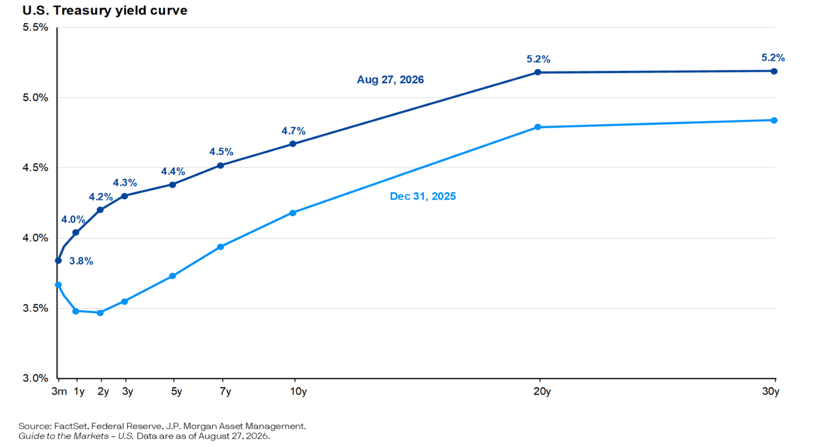
What pushed rates up? A few things lined up at once. Oil prices spiked due to the conflict with Iran. Inflation rose due to higher energy prices and concerns that the conflict will last longer than expected. The Fed and Treasury sent mixed signals. We are monitoring these changes in the economy and markets.
We also position your accounts for this type of volatility. Our bond holdings carry a shorter duration than the broad market. A shorter duration means less price movement when rates change. That is deliberate.
We look at cash the same way. Money market yields have slipped. For cash you do not need soon, a short-term Treasury fund can earn a bit more. The tradeoff is a little price movement and some rate risk. We weigh that account by account.
We are watching one thing closely. Whether inflation reaccelerates or long-term rates stay high. If that picture changes, we adjust.
Let us know if you would like to discuss your specific situation and whether a change in your asset allocation is warranted.
Your Market Analyst,
Tony